
INSPIRE in the News
January 23, 2026
Measles is surging in the US. Wastewater tracking could help.
MIT Technology Review
“Mike McKay and Ryland Corchis-Scott at the University of Windsor in Ontario and their colleagues have also been testing wastewater samples for measles RNA. Between February and November 2025, the team collected samples from a wastewater treatment facility serving over 30,000 people in Leamington, Ontario. These wastewater tests are somewhat limited—even if they do pick up measles, they won’t tell you who has measles, where exactly infections are occurring, or even how many people are infected. McKay and his colleagues have begun to make some progress here.”
News Article: Measles is surging in the US. Wastewater tracking could help.

Photo: MIT Technology Review
January 15, 2026
Cross-Border Institute signs Memorandum of Understanding with Transport Canada
UWINDSOR NEWS
“‘Through this MOU, UWindsor brings together researchers, government, and industry to advance practical solutions in cross-border trade, mobility, infrastructure and policy—strengthening regional economic stability and shared prosperity across Canada,’ she says. […]
They also viewed research related to the data analytics and mapping of cross-border medical and pharmaceutical supply chains led by Dr. Hanna Maoh as part of the Canada Biomedical Research Fund-supported INSPIRE project at the University.”
News Article: Cross-Border Institute signs Memorandum of Understanding with Transport Canada

The Cross-Border Institute is dedicated to research on the movement of people, goods, services and finances across international borders (FILE/University of Windsor)
September 15, 2025
INSPIRE is leveraging its wastewater pathogen surveillance network to support Health Canada’s new drug surveillance initiative.
INSPIRE
The Health Canada’s Canadian Drug and Substance Watch (CDSW) combines data from multiple sources, including wastewater monitoring.
“The CDSW builds on surveillance activities that monitor drugs in Canada. It better informs government organizations, public health officials, law enforcement and border control agencies to develop public health responses in addressing the crisis. These responses prevent the spread of emerging drugs and reduce related harms. The CDSW differs from drug alert systems, which aim to prevent immediate harm by sharing information about the precise location and appearance of drugs.” – Canadian Drug and Substance Watch — Canada.ca

Dashboard from the Canadian Drug and Substance Watch
May 23, 2025
CBC Windsor Morning with Amy Dodge
CBC Windsor
Listen to INSPIRE’s Director, Dr. Mike Mckay speak about our “Cross-Border Collaboration to Advance Wastewater Surveillance” workshop at the 3:50 minute mark on this episode of “CBC Windsor Morning with Amy Dodge”.
Episode Link: Scientists point to need for more “winter science” on the Great Lakes | Windsor Morning | On Demand | CBC Listen

Photo: Amy Dodge
May 6, 2025
Millions of migrating birds pass through southwestern Ontario. Here’s how researchers are tracking avian flu
CBC Windsor
“The start of spring migration in February means that millions of birds from the U.S. have been moving north into Canada.
‘Essex County lies at the crux of two major migratory flyways,’ said Chevalier.
And that means that the region is, ‘a hotspot for understanding which species of birds move into our region, whether they carry the virus [and] whether they shed that virus into our waterways so that we can detect it,’ according to Dan Mennill, Chevalier’s supervisor and University of Windsor ornithologist.”

Photo: Jennifer La Grassa/CBC
April 2, 2025
Professor with U of G using AI tool to track potential measles outbreaks
CityNews
“A professor with the Univeristy of Guelph is hoping a new tool powered by artificial intelligence can help track and forecast potential measles outbreaks. […] The tool, called AI4Casting Hub, is focused around an interactive dashboard that uses artificial intelligence to combine and analyze research, submitted data, and more to help track and even predict the growth and rate of various diseases.”

Photo: Screenshot of AI4Cast Measles Outbreak Dashboard (University of Guelph).
March 24, 2025
INSPIRE at the WE-SPARK Annual Health Conference!
INSPIRE Training Network
“The WE-SPARK Annual Health Conference 2025 kicked off in style this last Saturday March 22nd, and we were so proud to see so many of our INSPIRE team members and trainees at the event. The program kicked off with plenary speakers Dr. Zayna Khayat, Dr. Paul Kurdyak, and Dr. Rama Khokha, as well as hearing from our very own Dr. Kendall Soucie about lived experience and research.”

Photo: INSPIRE speakers from the concurrent session.
March 17, 2025
Watching the water for bird flu
Canadian Institutes of Health Research: Health Research in Action
“Three scientists at the University of Windsor are also bringing a multidisciplinary approach to monitoring avian influenza, also known as bird flu. Dan Mennill is the ornithologist of the group; Mike McKay, the expert on Great Lakes microbiology; and Kenneth Ng studies how the virus might evolve through changes in genome sequences.”

Faculty of Science Master’s student Cameron Chevalier collecting a water sample at Point Pelee National Park. (Photo: H. Priebe)
December 12, 2024
Guelph wastewater testing will continue for COVID-19 and more by university researchers
CBC News
“Wastewater in Guelph will continue to be monitored for COVID-19, influenza and other illnesses through a new partnership between researchers at the University of Guelph and Wellington-Dufferin-Guelph Public Health.
The researchers will get samples of wastewater three times a week, then will submit their findings to public health, which will in turn publish it to a public online dashboard.”
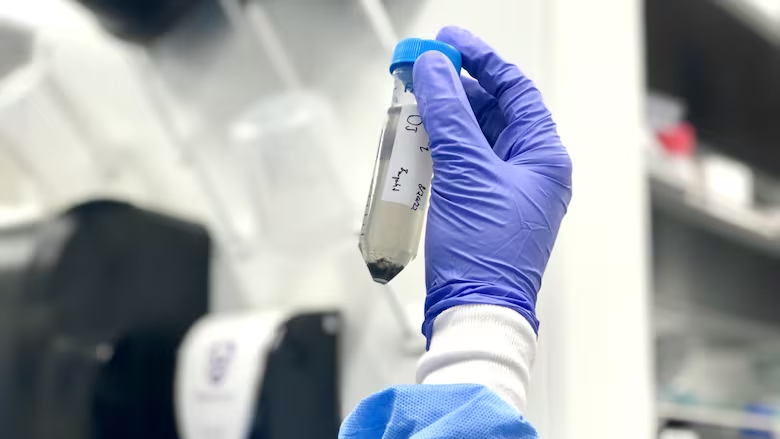
Photo: LAUREN PELLEY/CBC
November 18, 2024
Team to track instances of avian flu in Windsor-Essex birds
University of Windsor Public Affairs & Communications
“[Ken Ng] is the project lead on a team of scientists exploring the diversity of influenza virus subtypes infecting wild bird populations in Windsor-Essex. Using environmental samples taken from areas of Essex County where both migratory and resident birds congregate, they will monitor the levels and types of influenza infections to help prepare for future spread into commercial livestock and humans.”

Photo: UNIVERSITY OF WINDSOR
July 30, 2024
Ontario has a globally praised system for monitoring diseases through wastewater. So why is the province shutting it down?
The Globe and Mail
“In a separate effort to reduce health care costs, researchers at the University of Windsor and the University of Guelph last month received $15-million in federal funding in part to explore how wastewater can be better used to anticipate demand for biomedical supplies and help avert supply chain problems ranging from vaccines to PPE.”

Photo: SAMMY KOGAN/THE GLOBE AND MAIL
July 8, 2024
University of Windsor works with the community to help protect the Great Lakes
The Globe and Mail
Prior to the COVID-19 outbreak, Dr. McKay and his team had spent years studying viruses that could help prevent ecosystem-disrupting algae blooms in the Great Lakes.
“Within a few weeks of the pandemic, we pivoted and started doing wastewater surveillance for SARS-COV-2,” he says. “We were already looking for viruses in an aquatic medium; we just changed the medium from freshwater to wastewater.”

Photo: UNIVERSITY OF WINDSOR
June 12, 2024
Wastewater surveillance program ending July 31
CTV News
“When we are looking at the emergence of bio threats, we have to certainly look at our country but bio threats from elsewhere so having surveillance at strategic border locations such as Windsor-Detroit, Buffalo Fort Erie Niagara are important so we keep tabs on what is potentially entering the country,” adds Dr. McKay.

Photo: STEFANIE MASOTTI/CTV NEWS WINDSOR
June 7, 2024
COVID-19 wastewater surveillance continues in Windsor-Essex after province pulls plug: GLIER
CBC News
McKay said the provincial wastewater surveillance initiative covered all 34 public health units in Ontario and was lauded as probably the most comprehensive surveillance network in North America, if not globally.
Labs have shown the data gathered is “actionable” and can result in early mitigation or or containment and address a potential threat, McKay said.

Photo: CBC WINDSOR
June 1, 2024
Members of the University of Windsor Head-Up A Project to Strengthen Supply Chain Lines in the Event of Another Global Pandemic
Windsor Life Magazine
The INSPIRE project is not only at the forefront of early detection of the next pandemic providing guidance to public health, but is also examining ways of strengthening Canada’s ability to respond to consumer and commercial needs.

Photo: UNIVERSITY OF WINDSOR

Photo: RADIO-CANADA
May 7, 2024
Feds put $15M into pathogen tracking, health-care supply chain research to prep for next pandemic
CBC News
A new $15-million cross-border research project is underway to monitor the movement of pathogens in Canada and the U.S. in the event of future pandemics.
The federal government put up the money that will cover four years of equipment and research.
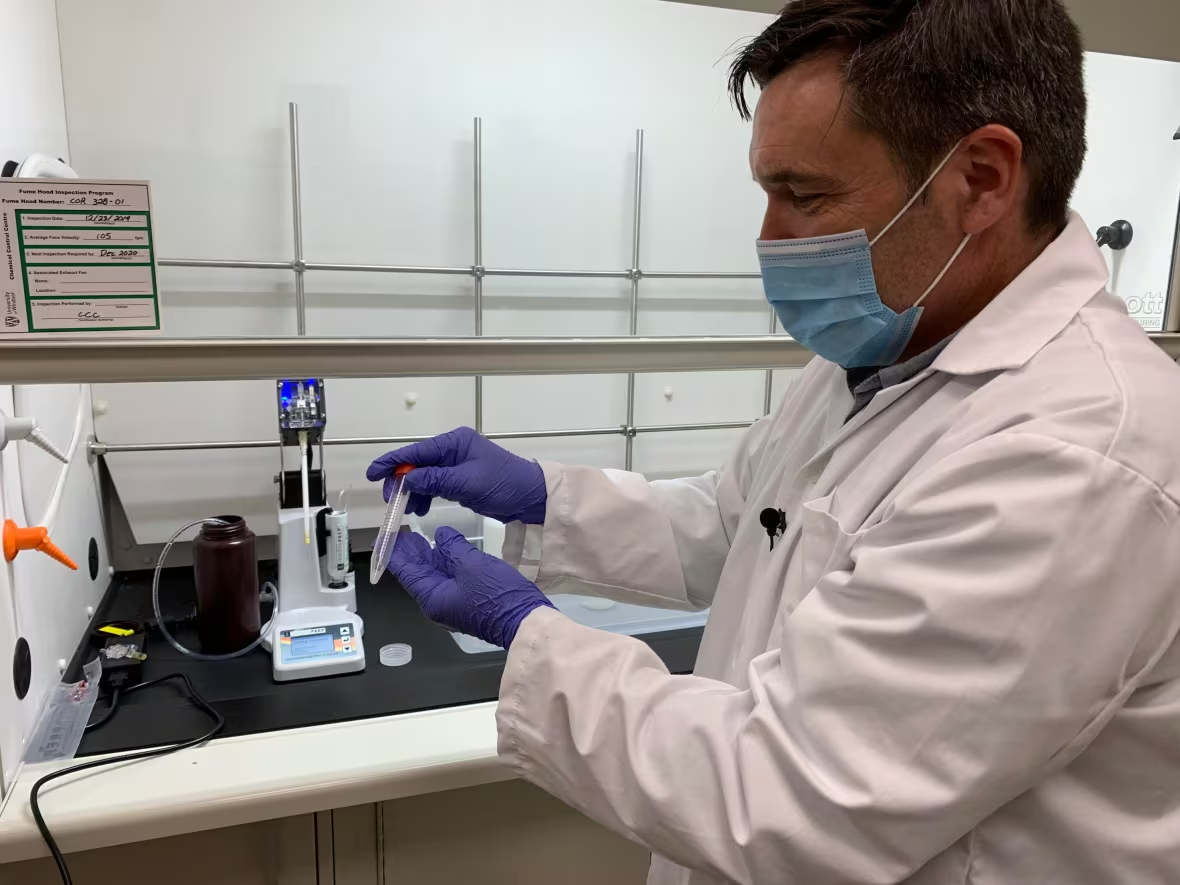
Photo: KATERINA GEORGIEVA/CBC WINDSOR
May 6, 2024
UWindsor Spearheads $15 Million Initiative to Boost Canada’s Pandemic Preparedness
University of Windsor Public Affairs & Communications
INSPIRE, short for the Integrated Network for the Surveillance of Pathogens: Increasing Resilience and Capacity in Canada’s Pandemic Response, brings together 43 experts from seven universities and public and private agencies in Canada and the United States. This team of microbiologists, biochemists, engineers, computer scientists, and experts in supply chains and public policy will look for ways to improve biomanufacturing and health sector supply chains, bolster cross-border trade and mobility, and explore new technologies in pathogen surveillance.

Photo: UNIVERSITY OF WINDSOR